Free Shipping on every order till 25th Feb

Niacinamide for Skin: Benefits, Side Effects & How to Use It Correctly
Learn how niacinamide benefits your skin, treats acne, brightens tone, and fits into your routine. Compare it with Vitamin C and avoid common mistakes.
2/7/20267 min read


Niacinamide is now regarded as among the most prescribed skincare ingredients across the world, with dermatologists, beginners, and even professionals using it. Niacinamide is a trend that has withstood the test of time, scientific studies, and decades of dermatological applications, unlike most other skincare trends, which come and go. This is because it is mild, handy, and can be used in a variety of applications, and therefore is one of the least problematic ingredients to incorporate in any routine without any fear of becoming irritated.
You see, this blog tells you everything you need to know about niacinamide: what it does, how it works, how you should take it, what the side effects are, what concentration of the vitamin is the right fit, and more so, how it measures up with Vitamin C. It also discusses the way niacinamide can be used to treat acne, pigmentation, pores, redness, and repair the skin. It is a significant ingredient that brings some observable results with regular application, whether you are a beginner or must restructure a broken skin barrier.
What Exactly Is Niacinamide?
Nicotinamide (also referred to as Niacinamide) is a water-soluble derivative of Vitamin B3. The body requires Vitamin B3 in its vital metabolic processes, yet it is not able to store this vitamin, thus making topical application useful to the skin. Niacinamide, when taken consistently, will aid in maintaining the skin in good health, in a healthy and balanced state.
The most popular aspect of niacinamide is that it will help treat several issues simultaneously in skincare. The majority of ingredients possess one or two purposes: either brightening, acne control, or hydration. But niacinamide promotes virtually all of the skin, as it builds the barrier, lessens inflammation, regulates the amount of oil, reduces dark spots, enhances the elasticity, and calms the skin. This is why it is one of the most diverse activities.
How Niacinamide Works on the Skin
To discern the reason behind this effectiveness of niacinamide, it is best to know how it works behind the scenes. By using it on the skin, niacinamide enhances the generation of ceramides, which are the natural lipids that strengthen the barrier and the retention of water. The healthy barrier is resistant to pollution, UV damage, bacteria, and irritants.
Niacinamide is also effective in balancing the production of sebum, hence the high sensitivity of oily and suspected of acne skin to it. It also decreases inflammation, which is among the key causes of acne and reddishness. Simultaneously, it decreases the amount of melanin that is transferred to the upper layers of the skin and contributes to the removal of dark spots and pigmentation. Niacinamide is also an antioxidant, that is, it helps the skin to be resistant to stress and environmental aging.
To summarize, niacinamide acts on various levels – surface, deeper layers, and cellular activity to provide skin with a healthier and even-toned look.
Niacinamide Benefits: Why Dermatologists Recommend It
The list of benefits of the use of niacinamide is long, and that is why this compound is found in serums, moisturizers, sunscreens, cleansers, and even in medical-grade formulations. All the benefits are beneficial to the overall skin condition and make the ingredient appropriate to nearly all types of skin.
Strengthens the Skin Barrier
The outermost protective material is the skin barrier. Once this barrier gets broken, the skin becomes coarse, itchy, dry, and more likely to develop acne and irritation. Niacinamide enhances the levels of ceramides, which makes the barrier stronger and enhances moisture retention. This leads to relaxed, less irritated, and healthier skin, which is more able to protect itself.
Controls Excess Oil and Helps Prevent Acne
Niacinamide is among the best ingredients to deal with excess oil production. This is highly valuable in the case of individuals experiencing oily or combination skin since the surplus of sebum may lead to congested pores that cause an eruption.
Niacinamide helps to reduce inflammation around active acne less, prevents new pimples, and soothes the redness of breakouts. The fact that it can control oil positions it as the best product to use by individuals with shiny skin or those who experience acne breakouts.
That is why Niacinamide for acne solution is one of the most often searched terms online; its advantages are not as harsh as those of more powerful acne solutions.
Reduces Pigmentation and Dark Spots
Among the most common uses of niacinamide in brighteners is the fact that it can reduce the rate at which the pigment transfers to the skin surface. This assists in covering dark spots due to acne, sun exposure, or changes in hormones.
Niacinamide is so lightweight that it can be used on fragile skin, yet visible effects become visible with time, as compared to most brightening agents, which may irritate.
Improves Skin Tone and Texture
Niacinamide improves the general skin tone of smoothness and clearness with frequent usage. It minimizes uneven tonality, harsh texture, and dullness. The skin appears lighter and smoother, and healthier, without makeup.
Minimizes Enlarged Pores
Excess oil, loss of elasticity, or accumulation that occurs within the pores tends to cause large pores. Niacinamide is useful in reducing the size of big pores by controlling sebum, firming the skin surface as well, and decongesting. With time, the pores will become less evident, and the skin will appear more civilized.
Anti-Aging Support
Niacinamide can be used to minimize the occurrence of fine lines and wrinkles by enhancing the production of collagen and protecting the skin against oxidative stress. It promotes elasticity and firmness, which will make one look younger. Although it is not as potent as retinoids, it is a good, gentle anti-aging ingredient that helps in long-term skin health.
Calms Redness and Soothes Sensitivity
Individuals with rosacea, eczema, and those with sensitive skin usually have difficulties with locating ingredients that do not aggravate. Niacinamide is also extremely calming and soothes erythema and inflammation. It fortifies the barrier, which makes the skin less reactive with time.
Niacinamide vs Vitamin C: What’s the Difference?
Niacinamide vs Vitamin C is often compared by people since both ingredients are believed to brighten skin and address pigmentation. They appear to have similar benefits, yet they differ in the nature of their operation.
Niacinamide is pacifying, stable, and buttressing.
Vitamin C is a vitamin that is aimed at brightening and collagen enhancement, being an antioxidant.
Vitamin C is quicker on pigmentation but may cause irritability to sensitive skin.
Niacinamide is less aggressive and is recommended when one is starting or when he/she cannot stand the powerful Vitamin C serums.
They may be administered concurrently in present preparations, or individually, as Vitamin C in the morning and niacinamide in the evening.
How to Use Niacinamide Correctly in Your Routine
The proper use of niacinamide will be more effective. It may be applied in the morning as well as in the evening, but regularity is the major point.
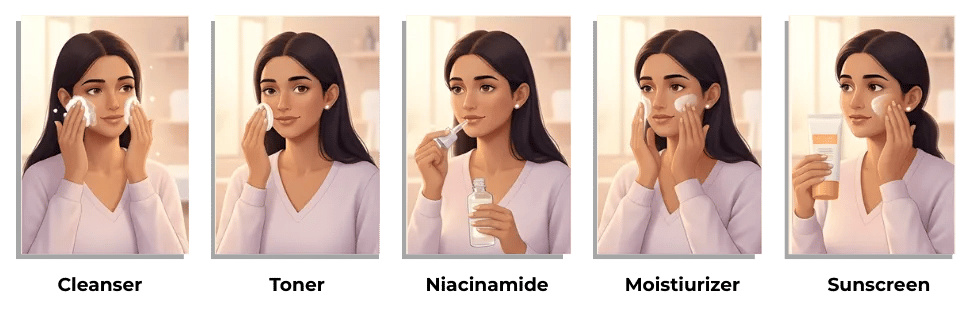
Basic Application Order
Cleanser
Toner (optional)
Niacinamide serum
Moisturizer
Sunscreen (during daytime)
It is also compatible with the majority of the skincare ingredients, such as hyaluronic acid, ceramides, peptides, salicylic acid, and even Vitamin C.

Choosing the Right Concentration
There are various strengths of Niacinamide. The concentrations have each purpose:
2% – on sensitive skin, broken barrier, and novices.
4-5% – suitable in case of brightening, mild acne, and pigmentation.
10% – in case of unremovable marks, oiliness, and noticeable pores.
Increased percentages are not necessarily good results. Individuals who have sensitive skin can be subjected to flushing, redness, or slight irritation at 10 percent; thus, a lower percentage should be used first.
How Long Does Niacinamide Take to Work?
Based on the concern, however, in general:
Week 1: increased hydration, reduced oil.
2-4 weeks: redness and acne improvements.
6-12 weeks: pigmentation disappears, and texture is better.
3 months and other: the general clarity and brightness.
One needs patience and consistency. Niacinamide is not an immediate solution; it is a long-term support factor.
Niacinamide for Specific Skin Types
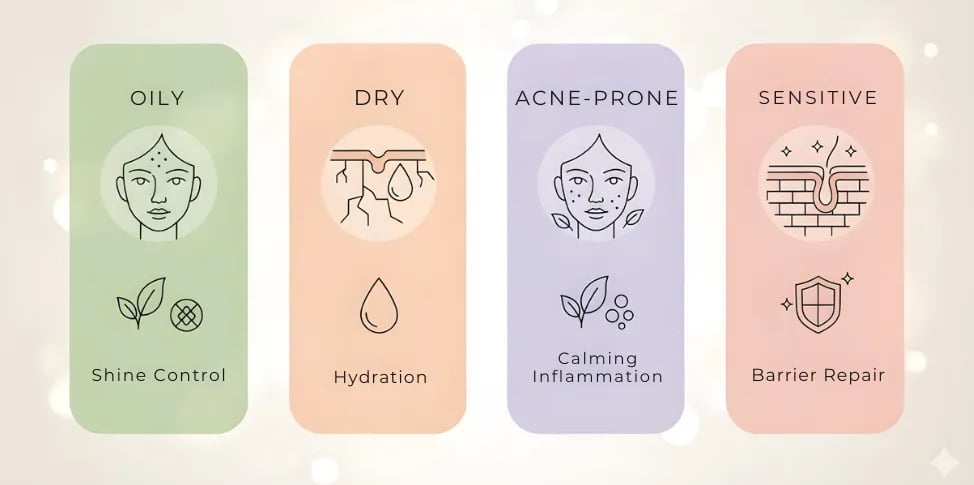
For Oily Skin
Niacinamide aids in managing the shine, greasy skin, and clogging of the pores. It renders the skin a touch balanced, and it does not feel greasy.
For Dry Skin
Niacinamide helps retain moisture and diminish dryness since it increases ceramides. It is particularly effective when combined with an oily moisturizer.
For Acne-Prone Skin
It has been proven to be the best ingredient that can control acne, owing to its anti-inflammatory, oil-controlling, and calming properties. It assists in the treatment of active breakouts and the prevention of the development of new ones.
For Sensitive Skin
Niacinamide reinforces the barrier, and the skin becomes less sensitive. The people who have highly reactive skin respond better when the concentration is low.
Side Effects and Who Should Avoid Niacinamide
Niacinamide is usually safe, but there are constant side effects in some individuals, like tingling, flushing, or slight redness. This occurs more frequently with high percentages.
Niacinamide should be avoided in people who have a known allergy to niacinamide or severe sensitivity to it, although such an experience is not common. When irritation happens, a reduction in percentage or taking it every alternate day normally takes its place.
Tips for Getting the Best Results
The combination of niacinamide and a sunscreen is one of the most effective. Sun exposure may cause pigmentation and lessen the action of brightening ingredients. A regular routine is the most important – the best long-term result is the daily use of niacinamide.
Combining it with other ingredients, such as hyaluronic acid, boosts hydration, whereas combining it with Vitamin C boosts brightness. In acne-prone skin, a combination of niacinamide and salicylic acid or azelaic acid can be used to make skin much clearer.
Simple Ways to Add Niacinamide to Your Routine
For individuals who are involved with a straightforward lifestyle, one of the simplest methods to incorporate niacinamide is by using your day cream and night cream daily. A daylight formula is a lightweight formula that reinforces the skin barrier, cuts down shine, and calms down the sensitivity during the day. Niacinamide can be used with the natural repair cycle of your skin at night, where switching to a richer cream will help hydrate and improve the texture of your face, along with helping to brighten. This will guarantee stability in the results without introducing additional steps.
Final Thoughts
Niacinamide is among the most diverse and universally useful ingredients in skincare. It enhances the barrier, hydrates better, soothes redness, regulates oil, dark spots, shrinks acne, and assists with the anti-aging process. Its mildness can be applied to all skin types, including sensitive skin, hence the high recommendations by dermatologists.
The right concentration with regular use, niacinamide may change the skin texture, tone, and health condition. It does not produce instant effects, but the results of regular use are long-term, and it is worth incorporating it into your day-to-day life.
Frequently asked questions
Can niacinamide help with acne?
Yes. Niacinamide helps in the reduction of inflammation, in the regulation of excess oil, and also in preventing new breakouts.
Can I use niacinamide with Vitamin C?
Yes, both can be layered. Apply niacinamide initially when required; it is good in combination to brighten.
How long does it take to see results?
In 2-4 weeks of regular use, most individuals observe the smoothing and calming of the skin.
Is niacinamide safe for sensitive skin?
Generally yes. Niacinamide is mild, calming, and is also well accepted even by sensitive types of skin.
Phone no. +91-84343 84343
Support: [email protected]
Location: 40-GF, Harmony Mall, Goregaon (W), Mumbai – 400


A Gentle Touch for Motherhood
Pregnancy-safe, thoughtfully crafted skin and personal care solutions designed to support women through every stage of motherhood.
Quick Links
Get in Touch